Greyhound Weight and Age on the Racecard
 Available in US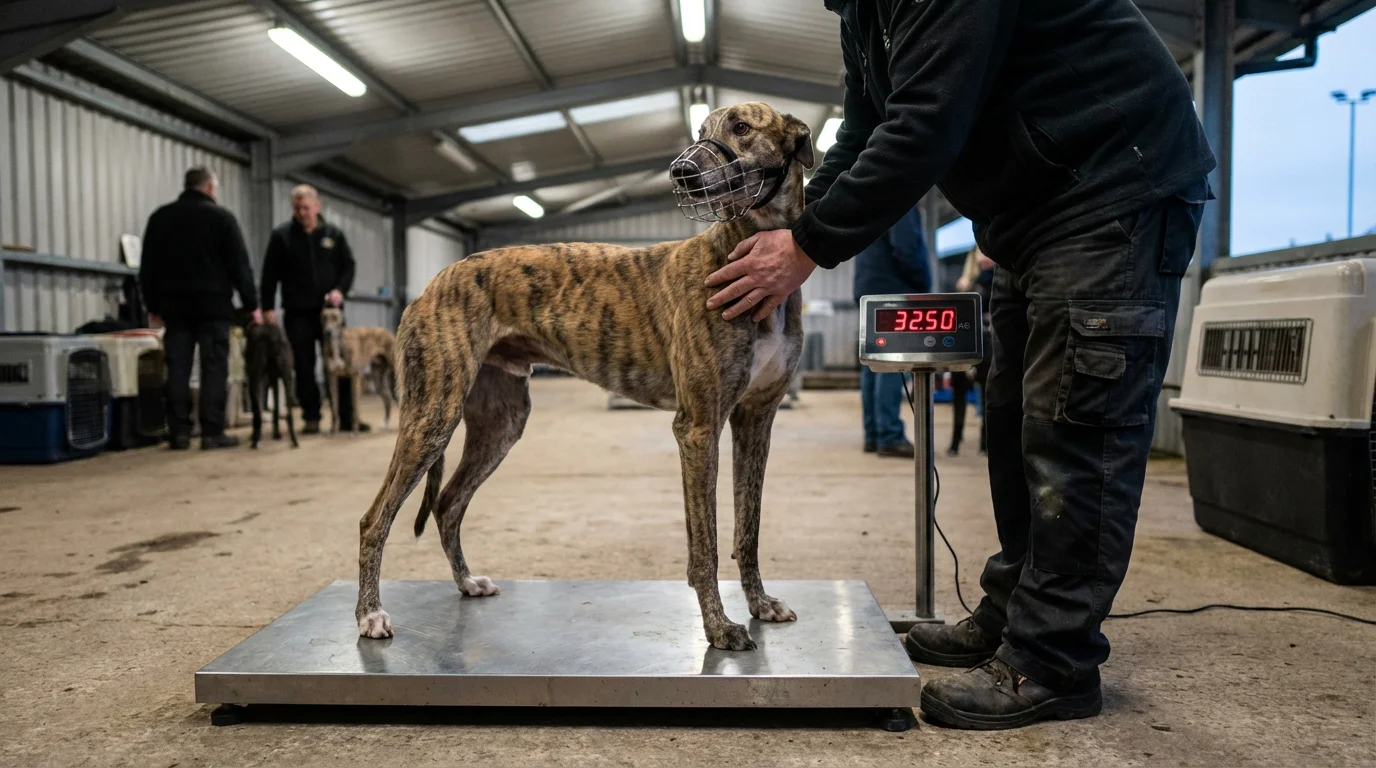
The Numbers That Tell You How the Dog Is Built
Every greyhound racecard displays two physical data points for each runner: weight and age. Neither tells you, on its own, whether the dog will win. But together they sketch a physical profile that, when read correctly, adds a useful dimension to your form assessment. Weight reveals the dog’s current condition and any recent changes that might signal fitness shifts. Age tells you where the dog sits in its career arc — whether it is still developing, at its physical peak, or in decline.
Most punters treat weight and age as static background information, no more relevant than the dog’s colour. That is a mistake, because both numbers are dynamic. Weight changes between races. Age affects performance trajectory over months and years. A dog’s form figures sit on top of these physical realities, and understanding the physical context can explain why form is improving, declining, or about to change.
Combine this with our form and sectional times guide in greyhound form sectional times.
How Weight Appears on the Card
Greyhound weight is listed in kilograms on UK racecards, typically to one decimal place. A dog might be listed at 32.4 kg for its most recent run and 31.8 kg for the run before that. The weight shown is the dog’s racing weight on the day of each performance, recorded at the track before the race.
Greyhound racing weights range broadly. Small bitches may race at 24 to 26 kg. Large dogs can reach 36 kg or more. There is no handicapping by weight in greyhound racing — unlike horse racing, where heavier burdens are assigned to better horses — so a heavier dog carries no penalty. Weight is a physical characteristic, not a competitive adjustment.
The racecard typically displays the weight for each of the dog’s last six runs, which allows you to track changes across the form cycle. Some platforms show only the most recent weight alongside the dog’s current form line. Either way, the key information is the same: what the dog weighs now, and how that compares to what it weighed during its best recent performances.
Weight Fluctuations and What They Signal
A stable weight across several runs is generally a positive sign. It suggests the dog is in a consistent training routine, eating well, and not under any physical stress that would cause weight loss or gain. Consistency in weight tends to correlate with consistency in performance — not perfectly, but as a supporting indicator.
A weight increase of half a kilogram or more between consecutive races can mean several things. The dog may have been rested and put on condition during the break. A bitch may be approaching her season, with hormonal changes causing weight gain. The trainer may have adjusted the feeding routine. A moderate increase (0.3 to 0.5 kg) after a layoff is normal and not necessarily a concern. A sharp increase (1 kg or more) without an obvious explanation warrants caution — the dog may not be at racing fitness.
A weight decrease is the more immediately useful signal for punters. Trainers aiming to sharpen a dog for a specific race will often bring the weight down slightly — leaner, faster, more race-ready. A drop of 0.3 to 0.5 kg from the previous run can indicate that the trainer is targeting this race and has prepared the dog accordingly. This is particularly significant when combined with other positive indicators: a class drop, a favourable trap draw, or a return to a track where the dog has performed well in the past.
Persistent weight loss across three or more races is a different story. A dog that is steadily losing weight may be dealing with a health issue, stress, or overracing. The form figures may still look acceptable, but the physical trajectory is downward, and performance is likely to follow. Treat a dog on a clear downward weight trend with scepticism, even if the recent finishing positions are respectable.
The most useful comparison is between today’s weight and the weight at which the dog produced its best recent calculated time. If the dog ran its fastest CalcTm at 31.2 kg and is racing today at 31.3 kg, it is in similar physical condition. If it ran that CalcTm at 31.2 kg and today weighs 32.5 kg, the physical profile has changed, and you should question whether the dog can replicate that level of performance.
Age Profiles: Puppies, Prime and Veterans
Greyhounds begin racing at around 15 to 18 months of age, with most entering competitive graded racing before their second birthday (Towcester Racecourse — Greyhound Racing Career). A greyhound’s racing career typically spans one and a half to three and a half years, with retirement usually occurring between four and six years of age (Towcester Racecourse — Greyhound Racing Career). Within that compressed career arc, there are distinct phases that affect performance expectations.
Young dogs — those under two years old — are frequently referred to as puppies on the card. They are still developing physically and mentally. Their form can be volatile: rapid improvement over a few weeks is common, as is inconsistency. A puppy that finishes sixth in one race and wins the next has not suddenly become a different dog — it has simply matured between runs. Punters assessing young dogs should weigh recent form more heavily than early career results, and should be alert to rapid grade progression as a sign that the dog is improving faster than its class suggests.
The prime racing age for greyhounds is broadly two to three and a half years. Dogs in this window are physically mature, mentally experienced, and at the peak of their speed and racing fitness. Form produced during this phase is the most reliable baseline for comparison. If a dog is two and a half years old and producing consistent CalcTm figures across multiple runs, you are looking at its true ability level. What you see is what you get.
After three and a half to four years, most greyhounds begin to decline. The decline may be gradual — a slow erosion of split times and finishing positions over several months — or sudden, triggered by an injury or the cumulative effect of hard racing. Veteran dogs are not worthless; some compete effectively into their fifth year, particularly in lower grades where the pace is less demanding. But the direction of travel is downward, and punters should be wary of backing older dogs at short prices based on form recorded six or twelve months earlier. That form belongs to a younger, faster version of the same animal.
Age and grade interact in predictable ways. A young dog moving up through the grades is following its natural trajectory: improving with maturity and being promoted accordingly. An older dog dropping through the grades is following a different trajectory: losing pace with age and being demoted to match. The first scenario creates natural momentum that form analysis can ride. The second creates a tempting trap — the class dropper that looks like a value bet but is actually a dog in permanent decline being placed at a level its deteriorating ability can just about sustain.
The Numbers They Carry
Weight and age are not the headline numbers on a greyhound racecard. They do not headline the form, they do not generate tips, and they do not feature in pre-race analysis on television or in the betting press. But they sit underneath everything else, providing physical context that the form figures alone cannot supply. A dog’s time tells you how fast it ran. Its weight and age tell you something about why — and whether it can do it again.
Check the weight column for changes. Check the age for career phase. Neither takes more than a few seconds per dog, and both can flag situations that the rest of the racecard misses: the leaner, sharper dog being targeted by its trainer; the young improver about to outgrow its grade; the veteran being backed on yesterday’s form. These are small edges, but small edges compound. Over hundreds of bets, the punter who reads the full racecard — including the physical data — sees a more complete picture than the one who stops at the form figures.
Understand weight and age factors on the greyhoundcardstoday homepage.
