GBGB Rules and Greyhound Welfare Standards
 Available in US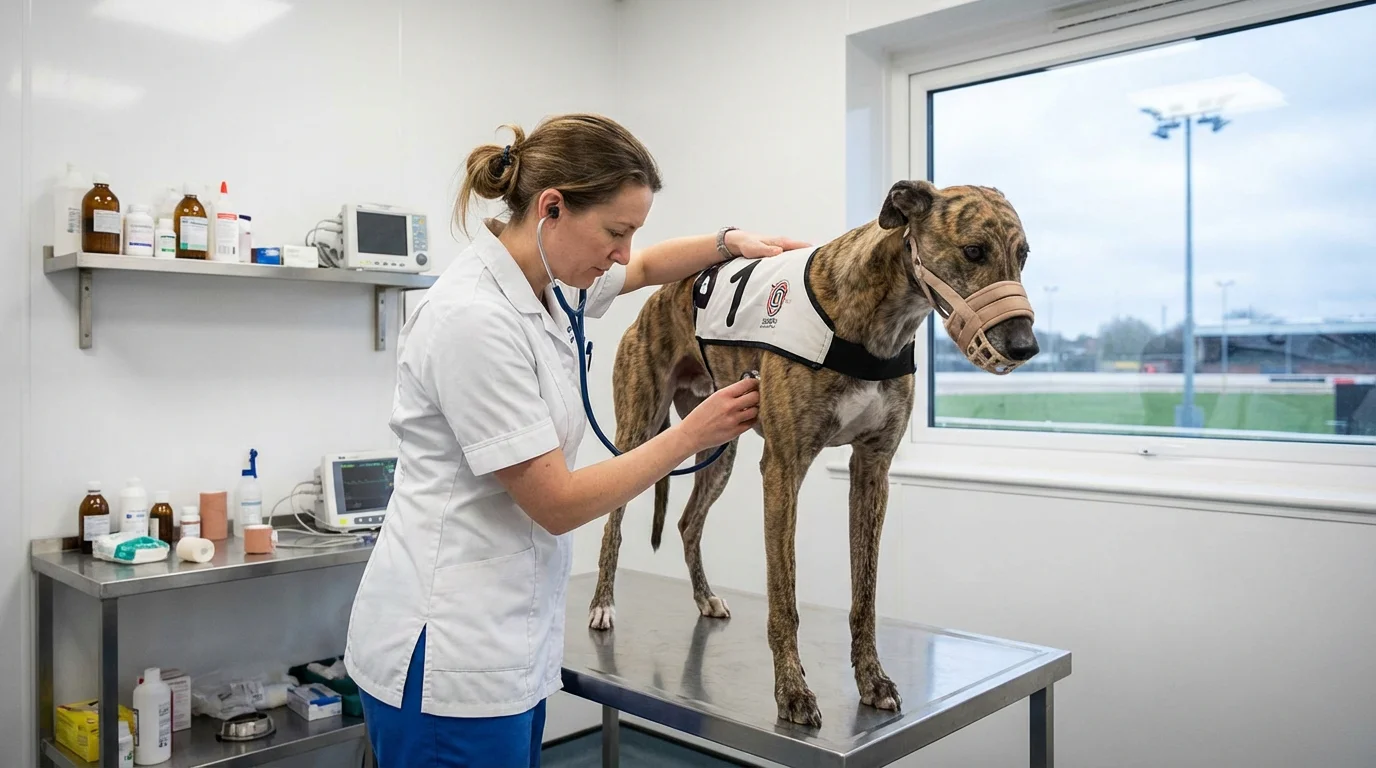
The Regulator Behind the Racing
Every licensed greyhound race in the United Kingdom is governed by the Greyhound Board of Great Britain. The GBGB sets the rules that trainers, owners, tracks, and racing officials must follow. It manages the integrity framework that underpins the betting product. And it oversees the welfare standards that determine how racing greyhounds are treated during their careers and beyond. For punters, the GBGB is mostly invisible — a regulatory body whose work happens behind the scenes. But the rules it enforces directly affect the racecard you study, the markets you bet on, and the confidence you can place in the fairness of the sport.
Understanding the basics of how the GBGB operates is not essential for placing a bet. But it is useful for placing an informed one. Knowing that the sport is regulated, that drug testing is routine, that welfare standards are mandated, and that the grading and race-management systems are governed by published rules gives you a more complete picture of what you are betting on.
See how GBGB rules affect race remarks in remarks and comment.
GBGB Structure and Role
The GBGB is the governing and regulatory body for licensed greyhound racing in Great Britain. It was established in 2009, replacing both the British Greyhound Racing Board and the National Greyhound Racing Club (GBGB — About Us). Its remit covers all 18 GBGB-licensed stadiums (GBGB — Racecourses), the trainers who operate under GBGB licences, and the officials who manage meetings at licensed tracks.
The board’s core functions include maintaining the Rules of Racing (GBGB Rules of Racing), which are the detailed regulations governing every aspect of competitive greyhound racing. These rules cover race eligibility, grading procedures, trap allocation and seeding, the duties of racing officials, the conduct of trainers and kennel staff, and the procedures for disputes and disciplinary action. The Rules of Racing are publicly available and updated periodically to reflect changes in practice or welfare science.
The GBGB also maintains the greyhound register — the database of all racing greyhounds in the UK, including their identity, ownership, trainer details, vaccination records, and injury history. This register underpins the racecard data that punters rely on: when you see a dog’s name, trainer, age, and form on the card, that information is drawn from the GBGB’s central register and verified against its records.
Separately, the GBGB oversees the appointment and performance of stipendiary stewards and racing managers at each track. These are the officials who manage the card, decide the grading, investigate incidents during races, and apply the rules on the ground. Their decisions — particularly the Racing Manager’s grading and seeding choices — directly influence the racecard and, by extension, your betting. A grading decision is not arbitrary; it is made within the framework of GBGB rules by an accountable official.
The board also coordinates with the Gambling Commission and SIS (Sports Information Services) on matters relating to the broadcast and betting product. The commercial arrangements that fund BAGS racing, the data feeds that populate bookmaker racecards, and the integrity monitoring that underpins market confidence all involve the GBGB in a regulatory or oversight capacity. The racing you see on your screen and the markets you bet into are shaped by this regulatory infrastructure, even when it operates entirely out of sight.
Drug Testing and Integrity
The GBGB operates a comprehensive drug-testing programme across all licensed tracks. Dogs are sampled randomly and targeted for post-race urine testing, with the aim of detecting prohibited substances that could affect performance. The list of prohibited substances covers stimulants, sedatives, anabolic agents, anti-inflammatory drugs, and other compounds that could either enhance or suppress a greyhound’s racing ability.
Testing is conducted by independent laboratories, and the results are reported back to the GBGB’s integrity team. A positive test triggers a disciplinary process that can result in fines, suspensions, the disqualification of results, and in serious cases the revocation of a trainer’s licence. The penalties are designed to deter doping and maintain confidence in the fairness of the racing product — confidence that is essential for the betting market to function.
For punters, the existence of a robust testing regime is a structural assurance. It does not eliminate the possibility of undetected manipulation — no testing system in any sport can guarantee that — but it raises the cost and risk of cheating to a level that deters the vast majority of participants. When you study a racecard and assess a dog’s form, you are doing so within a system where performance-altering substances are actively screened for and punished.
The GBGB also investigates non-doping integrity issues: suspicious betting patterns, unusual running performances, and potential breaches of the rules relating to the fitness of dogs presented for racing. This work is conducted in conjunction with the Gambling Commission (Gambling Commission) and the betting industry’s intelligence-sharing networks. The integration between racing regulation and betting regulation is a feature of UK sport that provides a layer of protection for both the sport’s credibility and the punter’s confidence.
Welfare Standards and Retirement
Greyhound welfare has been the most scrutinised aspect of the sport for the past decade, and the GBGB’s welfare standards have evolved significantly in response. The current framework covers the full lifecycle of a racing greyhound: breeding, rearing, training, racing, and post-racing retirement (GBGB — Commitment to Care).
During their racing careers, greyhounds at GBGB-licensed tracks are subject to veterinary inspections before and after racing. A track veterinary surgeon is present at every meeting and has the authority to withdraw any dog deemed unfit to race. Injury reporting is mandatory — trainers must report all injuries to the GBGB, and treatment records are maintained on the central register. The GBGB publishes annual injury statistics, including the number and type of injuries sustained at each track, as part of its transparency commitments.
Retirement and rehoming have become a major focus. The GBGB requires trainers to account for the destination of every greyhound that leaves their kennel, whether through rehoming, transfer to another trainer, or retirement. The board works with charities and rehoming organisations to facilitate the transition from racing to pet life, and it publishes annual data on the outcomes for retired greyhounds. The trajectory in recent years has been toward higher rehoming rates and greater transparency about what happens to dogs after their racing careers end.
For punters, welfare is a reputational and ethical dimension of the sport. Betting on greyhound racing with an awareness of the welfare framework means understanding that the sport operates within a regulated system that mandates veterinary oversight, injury reporting, and retirement accountability. It is not a perfect system — no welfare framework in any animal sport is — but it is a system with measurable standards, public data, and regulatory enforcement.
Informed Betting Is Responsible Betting
The GBGB’s rules and welfare standards are not directly relevant to your next bet in the way that split times and trap draws are. You will not find an edge in the disciplinary code or profit from knowing the drug-testing protocol. But understanding that the sport you bet on is regulated, governed by published rules, subject to integrity monitoring, and operating within a welfare framework adds context that casual punters often lack.
That context matters because it shapes trust. If you are going to invest time and money in studying greyhound racecards, you are entitled to know that the product is administered fairly. The GBGB’s role is to provide that assurance. The punter’s role is to use the level playing field it creates and find value within the structure. The two are complementary — regulation makes the game fair, and fair games reward skill.
Read about GBGB rules on the greyhoundcardstoday homepage.
